


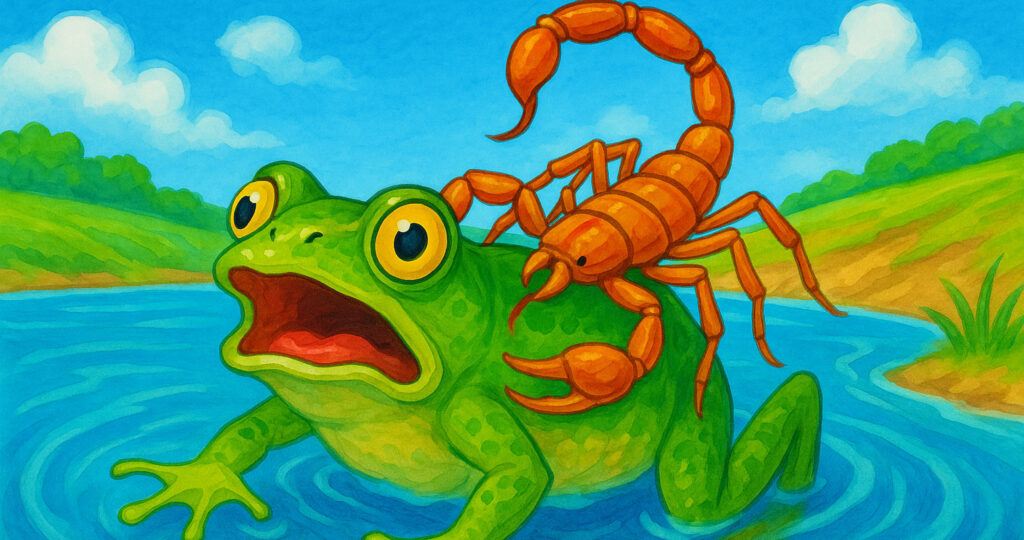
One day, a scorpion stood at the edge of a river and asked a frog nearby for a ride across.
The frog looked at him suspiciously.
“How do I know you won’t sting me?” the frog asked.
The scorpion replied, “If I sting you, we’ll both drown. That wouldn’t make any sense, would it?”
The frog thought about it and agreed. It seemed reasonable. So the frog let the scorpion climb onto his back, and they began to cross the river.
Halfway across, the frog felt a sharp pain in his back. The scorpion had stung him.
As the poison set in and they both began to sink, the frog cried out,
“Why did you do that? Now we’re both going to die!”
The scorpion calmly replied,
“I couldn’t help it. It’s in my nature.”
Moral of the story:
Be careful who you trust, even if they seem to have good reason not to harm you. Some individuals act according to their nature, even when it is self-destructive.
Here are a few deeper takeaways you can apply:
- Be cautious with trust – Just because someone gives a logical reason not to hurt you doesn’t mean they won’t. Past behavior and true nature often speak louder than words.
- Don’t ignore red flags – The frog knew the scorpion was dangerous but ignored his gut because of a convincing argument. Trust your instincts.
- People show you who they are—believe them – Some people can’t help but act in ways that are destructive or selfish, even if it goes against their best interest.
- Good intentions aren’t always enough – Even when you try to help someone, if their nature is harmful, your kindness won’t change them.
- Know your boundaries – Compassion is valuable, but it must be paired with wisdom. Don’t put yourself in situations where someone else’s harmful tendencies can drag you down.
It’s a fable about understanding character, being discerning with kindness, and protecting yourself from repeated harm.