


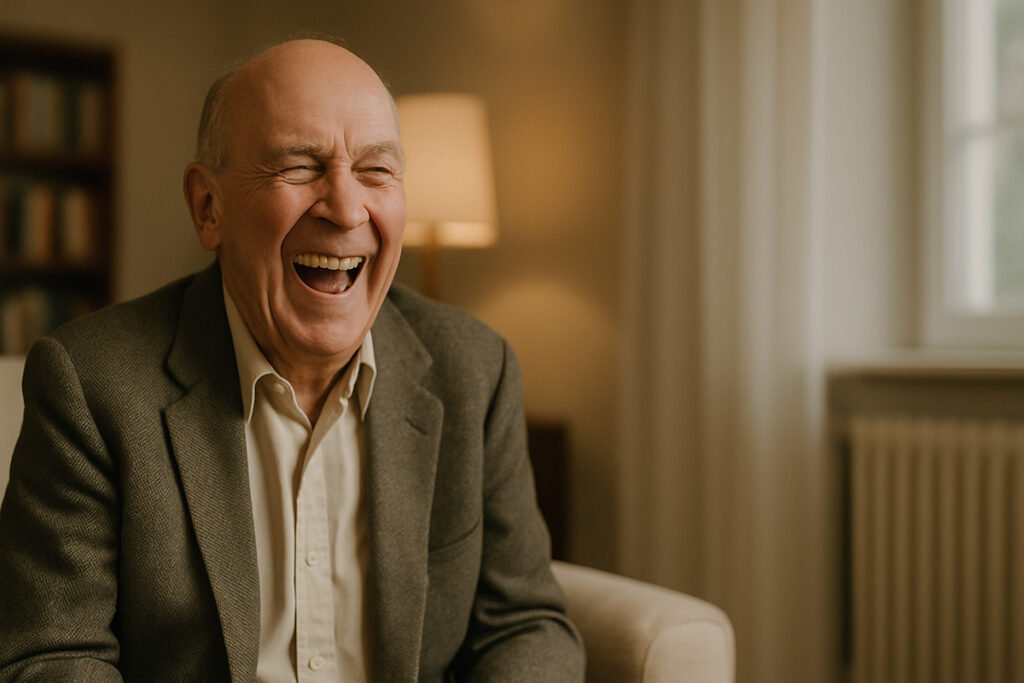
Norman Cousins was a respected journalist, author, and editor of Saturday Review—a man who used words to inspire thought. But in the late 1960s, his life took a sharp turn when he was diagnosed with a debilitating and painful illness: ankylosing spondylitis, a rare, degenerative disease that affects the spine and joints. Doctors gave him little chance of recovery and told him he had only a few months to live.
But Cousins refused to accept a hopeless fate. Instead of surrendering, he decided to take control of his healing in a revolutionary way. He began to research the effects of emotions and mindset on the body. He came to believe that stress and negativity contributed to his illness, so perhaps laughter, hope, and joy could contribute to his healing.
So, he checked himself out of the hospital and into a hotel room, where he created his own unconventional therapy: daily doses of laughter.
Every day, he watched hours of funny movies—The Marx Brothers, Candid Camera, and other comedy classics. He noticed that ten minutes of deep belly laughter gave him at least two hours of pain-free sleep, more than any medication had done. He also began taking high doses of vitamin C and focused on a strict regimen of hope, gratitude, and positivity.
Gradually, his condition began to improve.
Norman Cousins lived not just a few more months, but another 26 years. He documented his healing journey in the bestselling book “Anatomy of an Illness,” which became a pioneering story in the field of mind-body medicine. His story inspired a wave of research into the power of laughter, attitude, and the immune system.
What you can learn from his story:
- You are not powerless. Even when others count you out, your belief in your healing and purpose can be a catalyst for change.
- Laughter heals. Joy and humor aren’t just emotional escapes—they can be therapeutic tools.
- Your mindset matters. Cousins turned his illness into a mission, showing that resilience and optimism can change the course of your life.
- Be your own advocate. Don’t settle for a prognosis if it doesn’t sit right with your spirit. Take action, get informed, and lean into hope.
Norman Cousins didn’t just extend his life—he changed the narrative on what it means to be healed. His legacy reminds you that even in the face of impossible odds, your attitude, choices, and belief in recovery hold power.
“The tragedy of life is not death, but what we let die inside of us while we live.” – Norman Cousins