


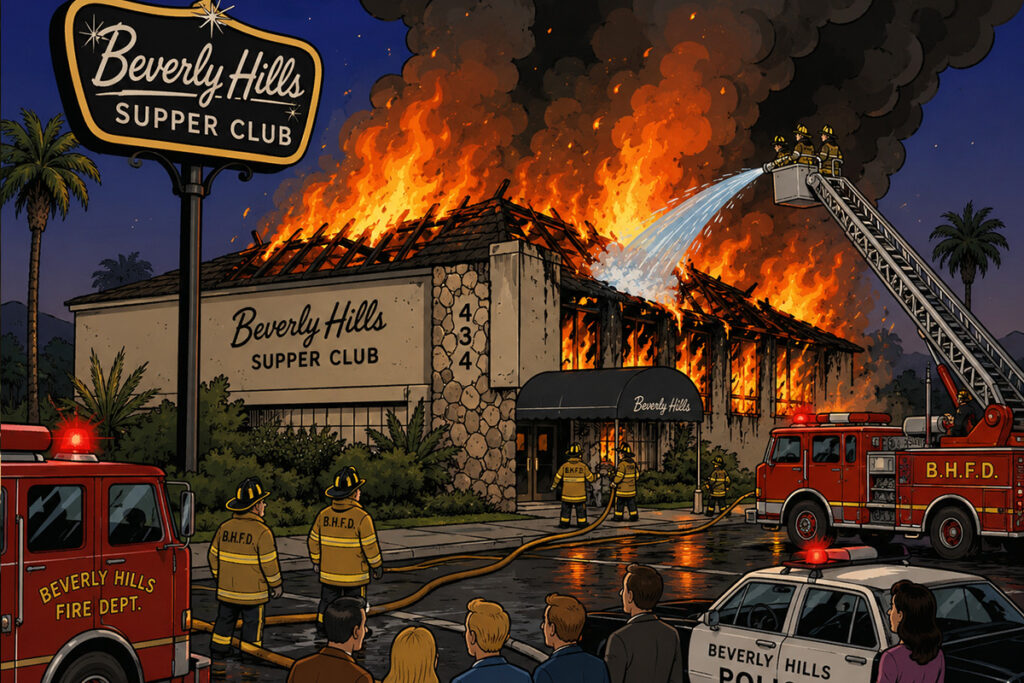
On May 28, 1977, the Beverly Hills Supper Club was overcrowded, especially in the Cabaret Room. This room could hold 600 people safely, but it had between 900 and 1,300 guests, with many sitting in the aisles. In total, the club had around 3,000 patrons, which was double the fire code limit of 1,500, based on the number of exits.
The wedding reception in the Zebra Room concluded around 8:30 p.m. due to the excessive heat and noise. The room was empty until 8:59 p.m., when an employee smelled smoke and confirmed a fire. She asked another employee to call the fire department while they tried to put out the flames with extinguishers. When they opened the door, oxygen rushed in, causing the small fire to flare up and spread quickly. The fire department was notified at 9:01 p.m. and arrived by 9:05, spotting smoke coming from the building.
As smoke billowed from the Zebra Room down the hall, nearby patrons and workers took notice. Employees instructed people to evacuate, but the building lacked a fire alarm, so those in isolated rooms did not realize there was danger until employees informed them. Fire investigators estimated the fire reached the Cabaret Room in two to five minutes. By 9:06 p.m., a busboy interrupted the show to order an evacuation, but the audience of around 1,000 had little time to leave. The fire also spread upward, blocking the spiral staircase, the best escape route for people on the second floor.
Around 9:10 p.m., the power went out, plunging the building into darkness. Panic broke out as people in the Cabaret Room started to push and shove. Two of the three exits in the room were soon blocked by fire, leaving everyone to use just one exit. Employees outside tried to pull guests to safety, but the crowd made this nearly impossible. Some who did escape got lost in the building’s confusing layout and ended up in dead ends. Firefighters focused on the Cabaret Room but found their efforts were not enough as temperatures rose, making rescues impossible.
At 11:30 p.m., fearing the roof might collapse, Command ordered all firefighters to evacuate. Around midnight, the roof fell onto what remained of the building.
The tragic Beverly Hills Supper Club fire on May 28, 1977, offers powerful and sobering life lessons that apply far beyond fire safety. Here are key takeaways that can be applied in everyday life, leadership, planning, and personal responsibility:
- Never Ignore Warning Signs
Lesson: Small problems ignored can become disasters.
Several people noticed smoke or heat before the fire erupted. Some chose to investigate, others dismissed it. Whether it’s in relationships, business, or health—when something feels off, act on it early. - Respect Limits and Boundaries
Lesson: Pushing beyond limits invites danger.
The club had over double its safe capacity. In life, when you stretch rules, overcommit, or ignore limits—whether with your health, finances, time, or responsibilities—you increase the risk of collapse. - Systems Matter More Than Good Intentions
Lesson: A broken system will fail, even with good people.
Employees tried to warn guests, but without alarms or communication systems, chaos won. In business, life, or organizations, good intentions must be backed by strong systems—clear procedures, communication, and structure. - Design for the Worst, Not Just the Best
Lesson: Hope for the best, but prepare for the worst.
The building’s layout was confusing, the exits insufficient, and fire protocols inadequate. Whether planning an event, building a team, or preparing for a new stage in life—think through what could go wrong, not just what could go right. - Take Personal Responsibility
Lesson: Don’t wait for someone else to act.
Some employees acted immediately. Others hesitated or deferred. In moments of crisis—big or small—your response matters. Don’t assume someone else will fix it, speak up, or lead. Be proactive. - Communication Saves Lives
Lesson: Silence during crisis is deadly.
There was no audible fire alarm. Entire rooms were left unaware until it was too late. In life and leadership, if you don’t speak up, clarify, or share truth at the right time, people suffer. Communicate clearly and often. - Panic Makes a Bad Situation Worse
Lesson: Calm minds save lives and futures.
Once panic set in, exits were jammed, decisions became frantic, and people got lost. When life feels overwhelming, train yourself to breathe, think clearly, and act with focus. Calm is a superpower in chaos. - Every Exit Strategy Matters
Lesson: Always know your way out before you’re in too deep.
Whether in a building, a job, a commitment, or a situation—don’t wait until it’s burning down to look for your way out. Think ahead. Plan how you’ll respond if things take a wrong turn. - Leadership Means Acting Early, Not Just Loudly
Lesson: The busboy who interrupted the show showed true leadership.
He didn’t have rank—but he acted when it mattered. Leadership isn’t about title; it’s about timing and courage. Be willing to speak up, break routine, or disrupt comfort to protect others. - Honor the Lessons of the Past
Lesson: Tragedies must teach us—not just sadden us.
The Beverly Hills fire changed fire codes, capacity laws, and safety regulations. In life, let your own setbacks or others’ stories teach you. Grow from pain. Apply wisdom forward.
This tragedy is a haunting reminder that when warning signs are ignored, systems fail, or people delay action, the consequences can be irreversible. But it also shows that awareness, preparation, and courage can save lives—and change futures.
Let this be more than history—let it shape how you live today.