Motivation can give you that initial push, but it might not always be reliable. Some days you’ll wake up energized and ready to go; other days you might feel tired, distracted, or just not interested. Relying solely on enthusiasm can make your consistency fluctuate based on how you’re feeling in the moment.
A better approach is to build a habit system that keeps you moving even when motivation is low.
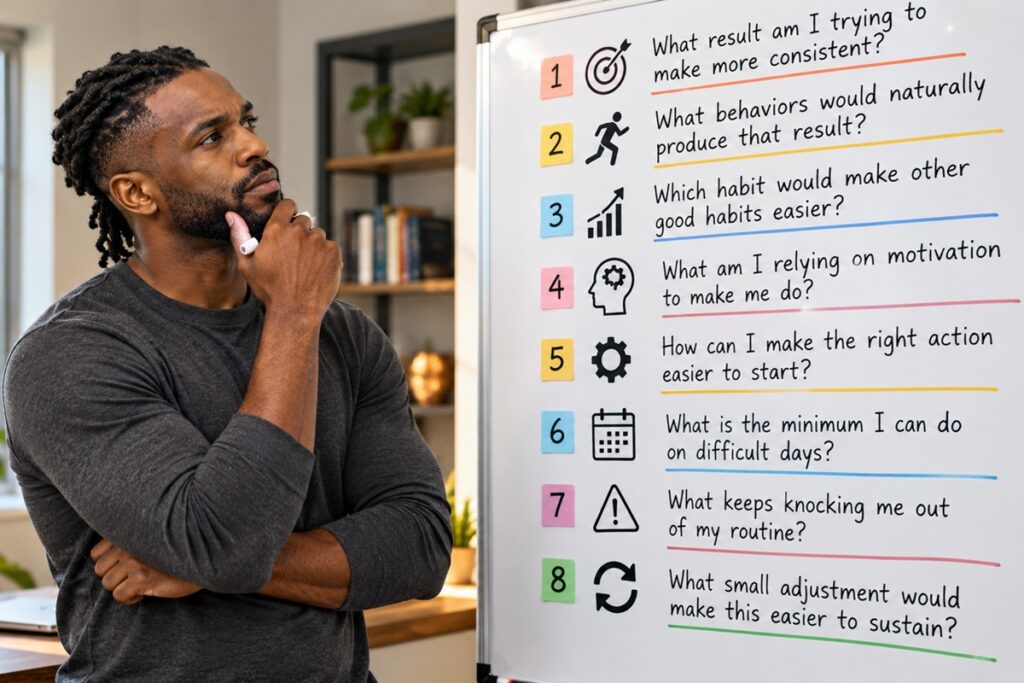
As you design that system, ask yourself these eight questions.
1. What result am I trying to make more consistent?
Start with direction.
Don’t just say, “I want to improve.” Define what improvement means. Better health? More productive mornings? Consistent writing? Greater financial discipline?
Clarity helps you choose habits that support where you want to go.
2. What behaviors would naturally produce that result?
Work backward from the outcome.
If you’re aiming for better health, it could be about incorporating activities like exercise, getting enough sleep, eating nourishing foods, and being prepared. If your goal is to write a book, dedicating just 30 minutes each morning can make a big difference.
Don’t only desire the result. Identify its causes.
3. Which habit would make other good habits easier?
Some habits have a multiplying effect.
Going to bed a bit earlier can really help you wake up sooner feeling refreshed, making it easier to exercise, think clearly, and enjoy eating healthier throughout the day.
Look for the habit that strengthens several others.
Build around high-impact habits.
4. What am I relying on motivation to make me do?
Pay close attention to the things you often say you’re “trying to get motivated” to do. That might be a sign that you could benefit from a regular routine. Instead of waiting until you feel ready, try setting a specific time, place, and way for the behavior to happen—making it easier to get started.
Replace repeated decisions with dependable routines.
5. How can I make the right action easier to start?
Reduce unnecessary friction.
Put your workout clothes out the night before. Keep your book where you usually sit. Schedule your important work. Prepare healthy food before you get hungry.
Make your environment support your intentions.
6. What is the minimum I can do on difficult days?
Your system shouldn’t only work when life is going well.
Create a smaller version of important habits.
If you can’t dedicate a full hour to exercise, spending just 15 minutes is still great! Maybe you can’t write 1,000 words, but writing 100 is still a wonderful effort. And if a whole chapter feels like too much, reading just two pages is perfectly okay. Every small step counts and adds up to progress!
Protect consistency even when you have to reduce intensity.
7. What keeps knocking me out of my routine?
Study your interruptions instead of simply criticizing yourself.
You might be taking on too many things at once. Your schedule may not be realistic. Maybe distractions are just too easy to come by, or perhaps you haven’t had a chance to get everything ready. Remember, it’s okay to adjust and take things step by step.
Identify the pattern.
A recurring problem may require a system change, not another motivational speech.
8. What small adjustment would make this easier to sustain?
Don’t constantly rebuild your entire routine.
Review it when you can. Keep what works well, and feel free to remove anything unnecessary. Making small improvements can help it shine even more!
Ask yourself:
“Could I realistically continue living this way six months from now?”
If the answer is no, simplify the system until the answer becomes yes.
In conclusion
Don’t base your progress only on your most enthusiastic days. Instead, focus on building routines you can maintain in everyday moments, helping you stay consistent and motivated.
The goal isn’t to stay motivated all the time, but to build habits, surroundings, and routines that make doing the right actions repeatedly easier.
Don’t just chase that initial feeling that makes you want to change—focus on building a system that helps you continue evolving even after that feeling fades. It’s about creating lasting habits that support your growth every day.